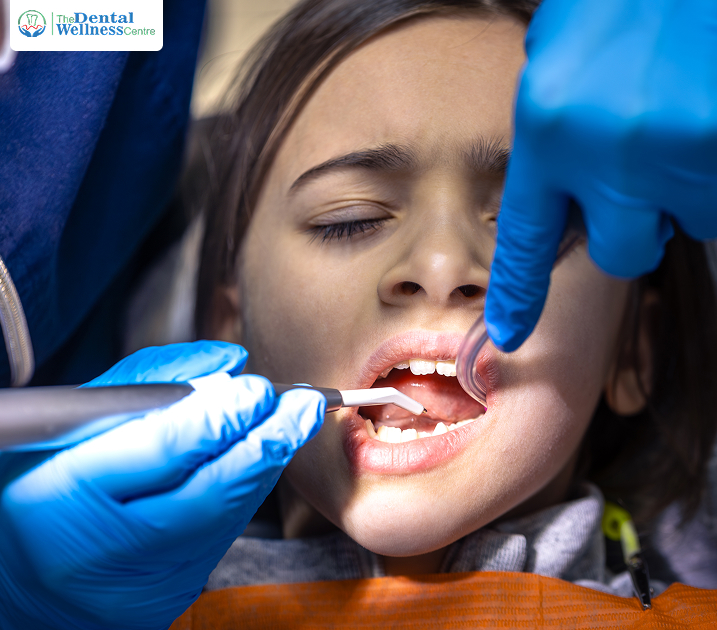
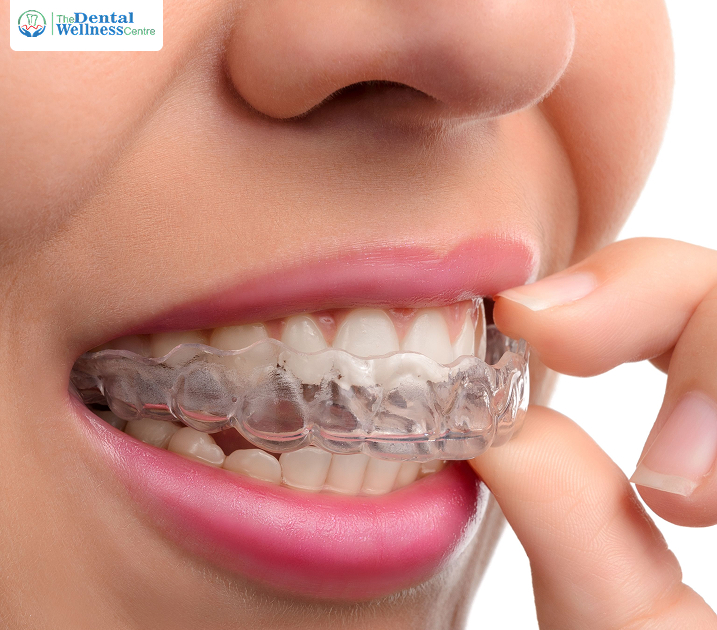
Ahmedabad, The vibrant heart of Gujarat that never stops. From the early morning chants at the Sabarmati Ashram to the late-night food festivals at Manek Chowk, life here revolves around community, culture, and perhaps most importantly food. However, for many Amdavadis, a persistent toothache can bring this joyful lifestyle to a grinding halt.
We often ignore a minor twinge while rushing to a meeting on SG Highway or dismiss sensitivity while enjoying a cold lassi. But dental health is the foundation of our well-being. This guide is designed to be the ultimate resource for anyone questioning if their tooth pain is a passing phase or a signal for a Root Canal Treatment (RCT).
Below, we explore the seven warning signs in exhaustive detail, the cutting-edge science behind the procedure, and why choosing the right specialist in Ahmedabad can make all the difference.
Understanding Tooth Anatomy: Why Root Canal Treatment is Essential
To appreciate why a root canal is necessary, you must first understand that a tooth is a complex, living organ, not just a static white stone. It is composed of three primary layers, each serving a vital function:
- Enamel: The translucent, incredibly hard outer shell that protects the tooth from the wear and tear of chewing. It is the hardest substance in the human body.
- Dentin: Situated just beneath the enamel, this porous layer contains microscopic tubules. When enamel wears down, exposure of the dentin leads to typical tooth sensitivity.
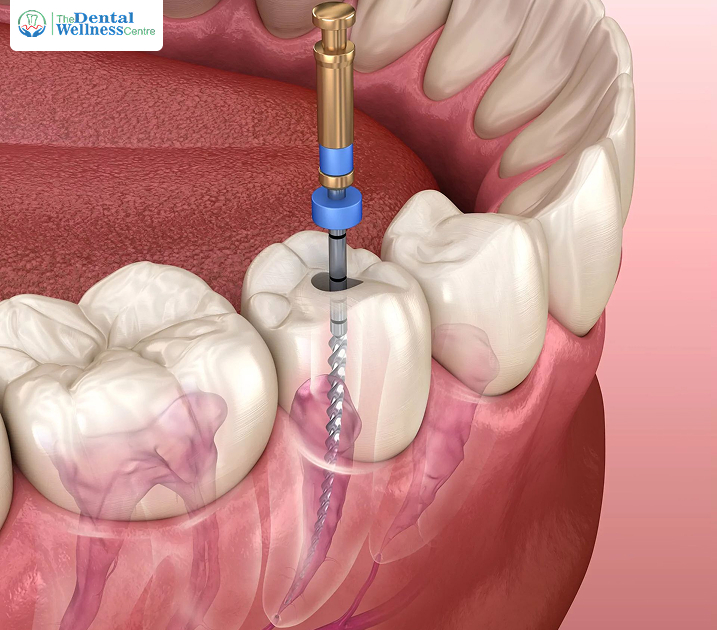
- The Pulp: This is the “heart” of the tooth. Located in the central chamber, the pulp is a soft tissue rich in nerves, blood vessels, and connective tissue. It is responsible for the tooth’s development and sensory responses.
The Breakdown: A root canal becomes necessary when bacteria breach the protective enamel and dentin layers usually through a deep cavity, a hidden crack, or physical trauma. Once bacteria invade the pulp, they cause an infection known as pulpitis.
Get more detailed information on root canal by reading this blog: Worried About a Root Canal Treatment in Ahmedabad? Read This First
7 Warning Signs You Need a Root Canal Treatment
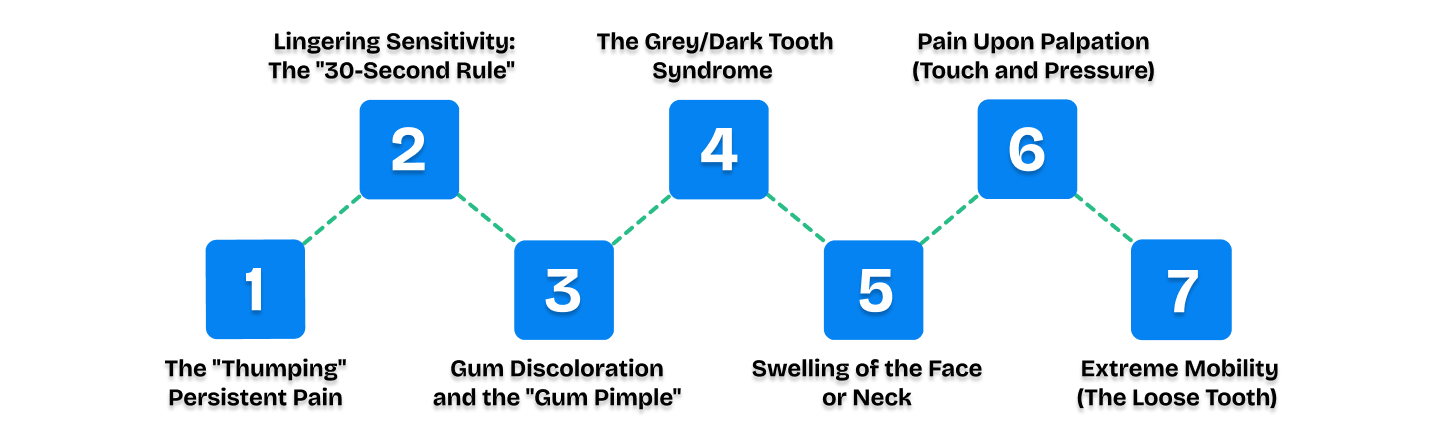
1. The “Thumping” Persistent Pain
This is not the occasional discomfort of a popcorn kernel stuck in your teeth. This is a deep, rhythmic, throbbing ache that seems to synchronize with your heartbeat.
- The Anatomy of Pressure: Inside your tooth is a hollow chamber called the pulp. When bacteria invade this space, your body sends white blood cells to fight the infection. This causes inflammation. However, unlike your skin, which can swell outward, a tooth is a rigid “box.” The inflammation creates massive internal pressure that compresses the dental nerve against the hard walls of the dentin. This is why it “throbs.”
- The “Referred Pain” Trap: One of the most confusing aspects of this pain is that it often radiates. You might think you have a headache, an earache, or a sinus infection. A skilled dentist in Ahmedabad will use percussion testing (tapping the tooth) to isolate the true culprit.
2. Lingering Sensitivity: The “30-Second Rule”
Most people have some level of tooth sensitivity. But there is a biological “line in the sand” between healthy sensitivity and a dying nerve.
- The Cold Test: If you take a sip of cold water and feel a sharp sting that disappears the moment the water is gone, your nerve is likely healthy but exposed (sensitive).
- Irreversible Pulpitis: If the pain lingers for 30 seconds, a minute, or more after the cold stimulus is removed, the nerve is in a state of “irreversible pulpitis.” This means the damage is too far gone for the nerve to heal itself.
- Heat Sensitivity (The Red Alert): Sensitivity to hot tea or coffee is often a more ominous sign than cold. Heat causes the gases produced by bacteria inside the tooth to expand, further increasing internal pressure. If heat triggers a dull, sickening ache, an RCT is almost certainly required.
3. Gum Discoloration and the “Gum Pimple”
Your gums are the “early warning system” for your jawbone.
- The Fistula: Have you ever noticed a small, pimple-like bump on your gums? In clinical terms, this is a Parulis or a fistula. It is essentially a drainage vent. When the infection at the root of your tooth produces too much pus, the pressure forces a tunnel through the bone and out through the gums.
- The Taste of Infection: Patients often report a bitter, metallic, or salty taste when this “pimple” bursts. While the pain might temporarily subside because the pressure is released, the infection is still active and is actively dissolving your jawbone.
- Discoloration: Healthy gums in the Ahmedabad climate should be a consistent “coral pink.” If you see patches of dark red, plum, or greyish-blue near a specific tooth, it indicates that the underlying tissue is deprived of oxygen or is saturated with infection.
4. The Grey/Dark Tooth Syndrome
A tooth that changes color is a “bruised” tooth. This is common in active individuals or those who have suffered a facial injury during a commute or a sports match.
- Internal Bleeding: Just like a bruise on your arm, a traumatized tooth can bleed internally. As the blood cells break down, they release iron and other pigments into the microscopic tubules of the dentin.
- The Necrotic Nerve: This color change (turning grey or dark yellow) usually means the blood supply to the tooth has been severed and the pulp is necrotic (dead). A dead tooth is a “hollow house” that bacteria will eventually occupy. An Endodontist (Root Canal Specialist) can clean this out and use internal bleaching to restore the tooth’s color.
5. Swelling of the Face or Neck
When a dental infection is no longer contained within the tooth or the immediate gum area, it becomes a systemic threat.
- Cellulitis and Ludwig’s Angina: Swelling in the cheek, jawline, or neck is a sign that the bacteria are traveling through the soft tissues. This can lead to Cellulitis, which makes the skin feel tight, hot, and painful.
- The Danger Zone: If the swelling makes it difficult to open your mouth (trismus) or, more dangerously, difficult to breathe or swallow, you must seek emergency dental care immediately. In Ahmedabad, clinics like The Dental Wellness Centre prioritize these cases to prevent the infection from reaching the heart or brain.
6. Pain Upon Palpation (Touch and Pressure)
Can you eat a soft dhokla but find that biting down on something firm causes a sharp jolt?
- The Periodontal Ligament: Your tooth isn’t glued into your jaw; it’s suspended by thousands of tiny fibers called the periodontal ligament. These fibers act as shock absorbers. When an infection reaches the apex (tip) of the root, it inflames this ligament.
- The “Taller Tooth” Feeling: Because the ligament is swollen, the tooth is actually pushed slightly “up” out of its socket. When you close your mouth, that tooth hits the opposite tooth before the others do, causing a sharp pain.
7. Extreme Mobility (The Loose Tooth)
In an adult, a loose tooth (unless caused by a direct hit) is a sign of bone loss.
- Bone Resorption: Chronic infection at the root tip triggers an immune response. Your body’s own cells begin to “eat away” the surrounding bone to try and wall off the infection. As the bone disappears, the tooth loses its anchor.
- The Last Chance: A mobile tooth is often in its “final hour.” Immediate RCT treatment can stop the bone loss and, in many cases, allow the bone to regenerate and the tooth to tighten back up.
Choosing the Right Dentist in Ahmedabad
Ahmedabad is a hub for medical tourism and advanced dentistry. However, not every clinic offers the same level of care. When looking for the best root canal treatment near me, consider these technical factors:
Rotary Endodontics vs. Manual Filing
Old-school root canals were done with hand files. They were slow and often noisy. Modern best dental clinics in Ahmedabad use Rotary Endodontics. These are nickel-titanium instruments that are flexible and electric-driven. They allow the specialist to clean the curved canals of your molars with 100% precision and much faster speed.
Single-Sitting RCT
For busy professionals in Ahmedabad, “Single-Sitting RCT” is a game-changer. If the infection hasn’t reached an acute abscess stage, a root canal dentist can complete the entire cleaning and filling in one 45-to-60-minute session.
What if one transformation could change the way you look and feel every day? Read on: How a Smile Makeover Clinic Transforms Your Confidence and Appearance
The Truth About Root Canal Price in Ahmedabad
Cost is a significant factor for many families. However, it is vital to understand the “Value over Price” equation.
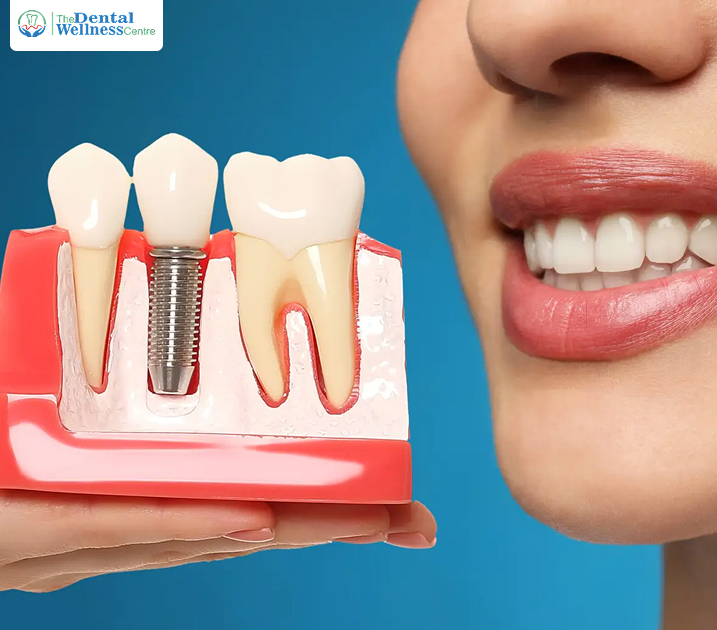
While the root canal price might seem high compared to a simple filling, the alternative (extraction + dental implant) can cost 5x to 10x more. At The Dental Wellness Centre, we provide transparent pricing and focus on long-term results.
Post-Treatment Care: What Happens After the RCT?
The root canal removes the pain, but it also removes the blood supply to the tooth. This makes the tooth “brittle,” like a dry branch of a tree.
- The Crown is Essential: You must get a crown (cap) after an RCT. Without it, the tooth is prone to cracking under the pressure of chewing.
- Avoid Hard Foods Initially: Until the permanent crown is placed, stay away from hard chikki or nuts.
- Oral Hygiene: A root-canaled tooth can still get a cavity at the gum line! You must continue brushing and flossing to protect your investment.

Why The Dental Wellness Centre is the Best Choice for You
Located in the heart of the city, we are recognized as the best dental clinic in Ahmedabad for general and specialized dentistry. Our approach to Root canal treatment in Ahmedabad:
- Painless Sedation: We provide Nitrous Oxide (Laughing Gas) sedation to ensure that your root canal treatment (RCT) is entirely free from pain. It is the top choice for children, as it allows them to feel nice and easy during the entire process.
- Advanced Laser Technology: We utilize lasers that reduce the need for traditional manual cleaning and drilling, significantly lowering pain and anxiety. The laser sterilizes the area during treatment, promoting quicker healing and reducing the risk of post-procedure complications.
- Advanced Numbing Techniques: We ensure the tooth is “profoundly numb” before we start.
- Specialist Expertise: Your procedure is performed by a dedicated dentist.
- Patient Education: We show you your X-rays and explain exactly what is happening so you feel in control.
Conclusion
Ultimately, tooth pain serves as your body’s critical alarm system, a signal that something beneath the surface requires urgent attention. It is a common misconception that dental pain might resolve on its own. In reality, ignoring these symptoms won’t make the bacteria disappear; it simply provides them with an opportunity to multiply, deepen the infection, and systematically destroy your underlying jawbone.
If you are experiencing any of the 7 signs mentioned from lingering sensitivity to facial swelling, it is time to stop searching for the best root canal treatment near me and consult a professional. Delaying treatment only increases the complexity of the procedure and the risk of tooth loss.
Ready to save your natural tooth? Visit The Dental Wellness Centre today. Our dedicated root canal specialists in Ahmedabad utilize advanced technology to provide a painless root canal treatment. We focus on patient comfort and high-precision care, ensuring you can get back to enjoying the vibrant flavors of Ahmedabad without the fear of sudden pain. Don’t let a treatable infection compromise your smile. Schedule your appointment with a leading dentist in Ahmedabad today and reclaim your oral wellness.
FAQs:
1. Does a root canal treatment hurt during the procedure?
Ans. Modern root canals are virtually painless due to advanced local anesthesia. Most patients report the sensation is no different than getting a standard cavity filling, providing immediate relief from pre-existing toothache pain.
2. How long does it take to recover from a root canal?
Ans. Most patients return to normal activities the next day. While mild sensitivity or jaw soreness may persist for 3–5 days, it is easily managed with over-the-counter anti-inflammatory medications like ibuprofen.
3. Is painless “Laser Root Canal” available in Ahmedabad?
Ans. Yes, The Dental Wellness Centre is a leader in laser dentistry in Ahmedabad. Lasers deep-clean canals, significantly reducing pain, vibration, and recovery time compared to traditional drilling methods.


 Dr. Mable Patel
 Dwc Admin