Mon To Sat 10:00 AM to 7:00 PM

When we go to the office every day, we carry on a time-honored tradition of getting to know our clients.
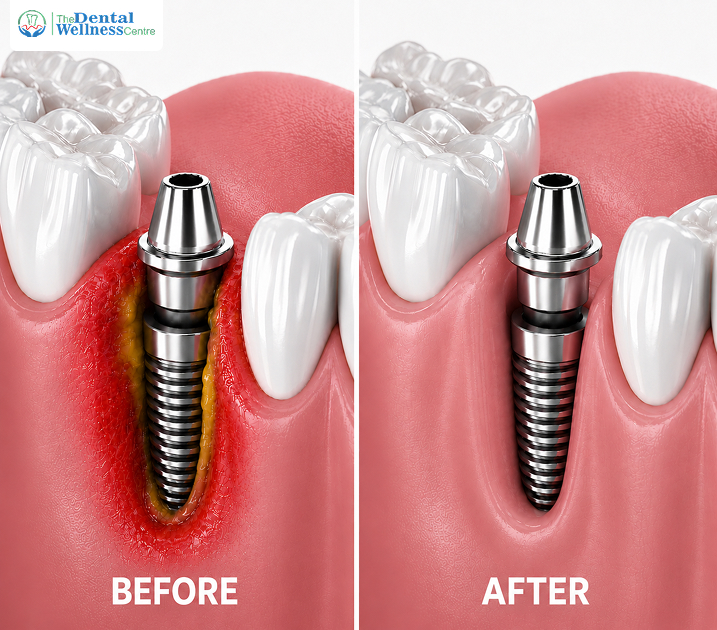
Getting a dental implant is one of the best decisions you can make for your oral health. It looks, feels, and functions just like a real tooth, and if you take care of it well, it can easily last a lifetime. But without proper maintenance, even the best implants can develop infections that would result in pain, bone loss, and costly complications.
The good news is that most implant infections are completely preventable. You just need to know what to do and do it consistently.
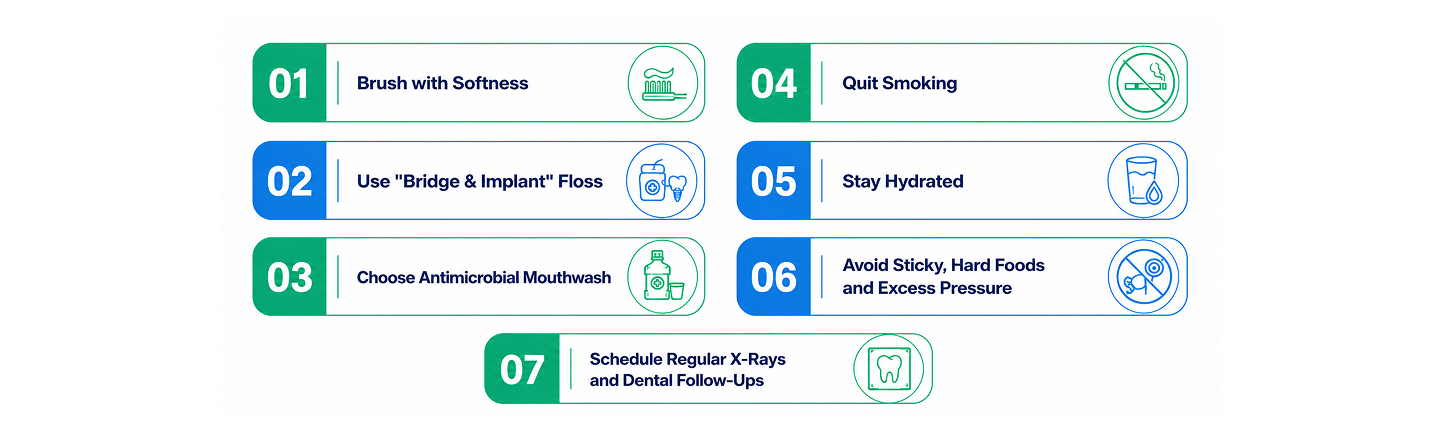
After having an implant, the way you brush matters just as much as how many times you brush. You should use a soft-bristle toothbrush and move it gently around the implant area. Hard brushing can harm the gum tissue around the implant, where bacteria could infest.
Brush at least twice a day, and pay extra attention to the gum line where the implant meets the tissue. This is where plaque likes to hide.
Regular floss can be tricky to use around a dental implant. That’s why floss designed specifically for bridges and implants is a game-changer. It has a stiffer end that you can thread under the implant and a soft, spongy section that cleans the sides effectively.
Floss at least once a day. Skipping this step is one of the most common reasons people develop peri-implantitis, which is an infection of the tissue around the implant.
Using an antimicrobial or antibacterial mouthwash regularly gives you an extra layer of protection. It cleans areas that your brush and floss might miss and helps in reducing the overall bacteria count in your mouth.
Look for one that is alcohol-free, as alcohol-based rinses can dry out your mouth and actually make things worse in the long run. Swish for 30 seconds after brushing for the best results.
If there is one habit that significantly raises your risk of implant failure and infection, it’s smoking. Tobacco reduces blood flow into the gums, slows the healing process, and creates an environment where bacteria thrive.
Studies consistently show that smokers have a much higher rate of implant complications compared to non-smokers. If you smoke, quitting is one of the single most important things you can do to protect your dental implant treatment and your overall health.
This one often surprises people. Drinking enough water throughout the day helps keep your mouth moist and flushes away food particles and bacteria. A dry mouth is a breeding ground for the kind of bacteria that cause infections.
If you are on medications that cause dry mouth, talk to your dentist about ways to manage it. Staying hydrated is simple, free, and incredibly effective.
Read our latest blog on: How Invisalign Treatment Helps Fix Crowded Teeth in Growing Children
Sticky foods like caramel and hard foods like nuts or crusty bread can put unnecessary stress on your implant, especially in the early months after placement. Chewing on hard objects or grinding your teeth puts excess pressure that can loosen the implant over time.
If possible, try to chew on the opposite side. Also, you should avoid biting into very hard foods, and if you grind your teeth at night, then you should ask your dentist for a night guard.
You cannot see what is happening beneath your gum line, but your dentist can. With regular X-rays, a dental team can spot early signs of bone loss or infection and stop them before they turn into serious problems.
You should never skip your follow-up appointments just because things seem fine. Catching an issue early is always easier and less expensive than treating an advanced infection. A good rule of thumb is to visit your dentist at least every six months after dental implant treatment.
Even with the best care, it is important to know the warning signs of a possible infection. If you notice any of the following, contact your dentist as soon as possible.
A little bit of swelling right after the procedure is completely normal. But if your gums stay swollen or get puffy weeks after the surgery, then it is a sign that something is not healing correctly.
Also Read on: Why Dentists Recommend Dental Implants Over Traditional Bridges
Occasional mild bleeding can happen after the dental implant, but consistent bleeding is not normal and should be checked out.
This can be a sign of infection or of a small amount of fluid or pus around the implant site. Do not ignore it.
A properly integrated dental implant should feel rock solid. If it feels like it is moving at all, see your dentist immediately.
Understanding the cause of implant infections helps you prevent them. The most common culprit is poor oral hygiene. When plaque and bacteria build up around the implant, they can cause inflammation in the gums. This is a condition called peri-implant mucositis. If left untreated, this can progress to peri-implantitis, which affects the bone that supports the implant.
Other contributing factors include smoking, uncontrolled diabetes, certain medications, teeth grinding, and receiving a dental implant from someone who lacks the proper training or equipment for the procedure. This last point is why the quality of your dental implant treatment and the expertise of your provider matter enormously right from the start.

Preventing infection is not just about what you do at home. It is also equally about the quality of care you receive at the clinic. At The Dental Wellness Centre, we are proud to be among the best implant dentists in Ahmedabad. We offer complete implant care, from start to end and after care, prioritising your long-term health and comfort.
If you are looking for the best dental implants in Ahmedabad with a team that genuinely invests in your outcomes, here is what sets The Dental Wellness Centre apart from others:
Our dental implant specialist team works with advanced digital technology and guided implant surgery to accurately place every implant. Precise placement reduces the risk of complications and helps in setting up a foundation for a successful, infection-free outcome.
At The Dental Wellness Centre, our team is led by specialists, Dr. Vishal Patel, Orthodontics & Dentofacial Orthopaedics, and Dr. Mable Patel, certified Dental Implantologist, FICOI, USA, both of whom have expertise in dental implants. As one of the most trusted names for the best implant dentist in Ahmedabad, we believe every patient deserves attentive, personalised care at every stage.
During follow-up visits, our team performs professional cleaning around the implant using equipment specifically designed for implants. This removes hardened deposits that a regular toothbrush simply cannot reach, thereby reducing infection risk significantly.
We do not believe one type of solution can be applied to different patients. Every patient’s bone health, bite and gum condition are different, so we also follow different approaches to treat them. Using full-mouth digital X-rays and 3D imaging, we track your implant health over time and step in early if anything looks concerning.
A dental implant is one of the most natural-feeling and durable solutions for a missing tooth, but it is only as good as the care you give it. The seven steps mentioned above are simple enough to include in your daily routine, and the result is also very positive: a healthy, confident smile that lasts for decades.
Be consistent with the care you give to the implant at home, notice all the warning signs, and never underestimate the importance of professional check-ups. And if you are searching for a trusted dental implant specialist or want to know more about dental implants in Ahmedabad, the team at The Dental Wellness Centre is always here to help.
Ans: Signs of an infected dental implant include swelling, pain, bleeding gums, pus, bad breath, and difficulty chewing near the implant area.
Ans: No, dental implant infections usually require professional treatment. Ignoring symptoms may lead to bone loss or implant failure over time.
Ans: Use a soft toothbrush, non-abrasive toothpaste, floss regularly, and rinse with an antibacterial mouthwash to keep dental implants clean and healthy.
Ans: Yes, trapped food particles and plaque buildup around implants can increase bacterial growth and lead to gum inflammation or infection.
Ans: Yes, smoking affects healing and blood circulation, increasing the risk of infection, gum disease, and dental implant failure.
Ans: Dental implant infections are not very common, but poor oral hygiene, smoking, and untreated gum disease can increase the risk significantly.

Dr. Mable Patel is an experienced Orthodontist and Implantologist at The Dental Wellness Centre in Ahmedabad, known for her gentle approach and excellence in smile design.
25 Aug 2026
Dr. Mable Patel
17 Aug 2026
 Dr. Vishal Patel
22 Jul 2026
Dr. Vishal Patel