Mon To Sat 10:00 AM to 7:00 PM

When we go to the office every day, we carry on a time-honored tradition of getting to know our clients.
Oral hygiene is a fundamental part of overall health, and professional dental care plays a vital role in maintaining it. Among the various procedures offered by dental professionals, teeth cleaning and polishing are two essential preventive treatments. These procedures not only help in maintaining oral cleanliness but also prevent dental diseases and enhance the aesthetic appearance of teeth. Understanding the importance, process, benefits, and potential risks of teeth cleaning and polishing can empower individuals to take better care of their dental health.
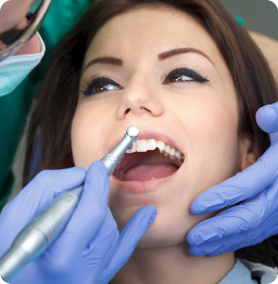
Teeth cleaning, often referred to as prophylaxis in dental terms, is a professional dental procedure that involves the removal of dental plaque and tartar (calculus) from the teeth. While daily brushing and flossing are crucial, they are not sufficient to remove hardened tartar deposits and reach certain areas of the mouth. Professional cleaning is necessary to thoroughly clean the teeth, especially below the gumline.
Additionally, preventive treatments like fluoride applications and dental sealants may be offered during cleaning appointments, especially for children, to further protect teeth from decay.
The benefits of regular teeth cleaning and polishing go beyond just a bright smile. These procedures are essential for maintaining overall oral health and preventing more serious issues in the future.
There is a well-established connection between oral health and systemic health. Poor oral hygiene has been linked to conditions such as heart disease, diabetes, and respiratory infections. Regular cleanings help reduce the bacterial load in the mouth, potentially lowering the risk of these systemic issues.
One of the main advantages of professional cleaning is the prevention and management of gum diseases like gingivitis and periodontitis.
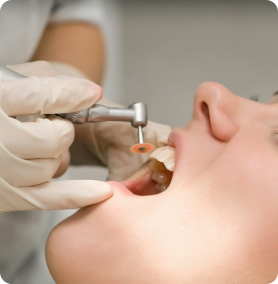
Dental plaque, if left untreated, can lead to tooth decay. By removing plaque and tartar, cleaning significantly reduces the risk of cavities
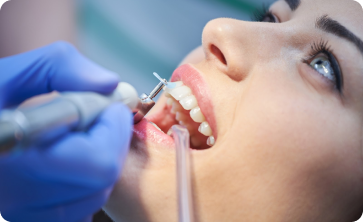
Persistent bad breath (halitosis) is often caused by food particles and bacterial buildup. Professional cleaning eliminates these odor-causing elements, leading to fresher breath.
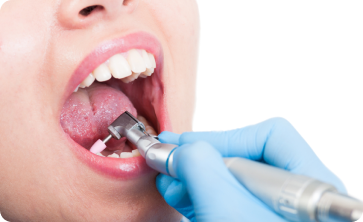
Though not a whitening procedure per se, polishing removes surface stains caused by coffee, tea, tobacco, and certain foods, contributing to a cleaner and brighter appearance.
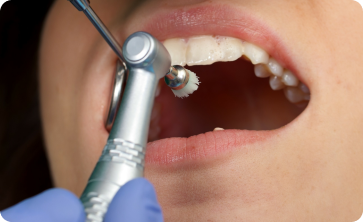
Routine visits for cleaning provide an opportunity for the dentist to detect early signs of dental problems like cavities, broken fillings, or oral cancer.
Teeth cleaning and polishing are cornerstone procedures in preventive dentistry. They not only enhance the appearance of the teeth but also play a critical role in preventing dental and systemic diseases. By combining professional care with good oral hygiene practices at home, individuals can achieve and maintain optimal oral health throughout their lives. Regular visits to the dentist for these simple yet powerful procedures can lead to a lifetime of healthy smiles and overall well-being

The Dental Wellness Centre is a true dental oasis! With a focus on Invisalign, dental implants, and digital dentistry, Dr. Vishal and Dr. Mable ensure each visit is a seamless and pleasant experience.

My experience with the painless root canal treatment at The Dental Wellness Centre was fantastic. The dentist was gentle and skilled, and I experienced minimal discomfort during and after the procedure. Highly recommend their expertise in endodontics!

The painless root canal treatment I received at The Dental Wellness Centre was a game-changer. The dentist was skilled and attentive, and I experienced minimal discomfort throughout the procedure. Thank you for the excellent care!

Dr. Vishal and Dr. Mabel are very knowledgeable and best orthodontist team in the town...very great experience..Thank you for my beautiful teeth... I haven’t stopped smiling since I had my braces removed. Thanks again.”

I recently had the privilege of undergoing dental treatment of tooth implantation at Dr. Mable's clinic, and I'm beyond impressed. Not only is Dr. Mable an exceptional dentist, but their clinic is also top-notch. The state-of-the-art facilities and the use of the latest dental technology were evident throughout my entire visit. From digital imaging for precise diagnostics to advanced equipment for the tooth implantation procedure, Dr. Mable's clinic truly embraces cutting-edge technology. I felt confident and well-cared for every step of the way. If you're seeking modern, high-quality dental care, Dr. Mable and their clinic are the perfect choice.

I completed my rct here and it's was almost painless treatment ..and the Doctors behavior ,work is excellent and appointment time always precise.. Thank you the dentalwellness centre and team...

The Dental Wellness Centre provided exceptional care during my dental implant journey. Dr. Mable's professionalism and the clinic's friendly atmosphere made each visit comfortable. Thrilled with the outcome!

I had an excellent experience at this dental clinic in Ahmedabad. Dr. Mable Patel and her team were professional, caring, and made sure my treatment was comfortable and painless. With her expertise, it’s clear why she’s considered one of the top 10 dentists in Ahmedabad. I highly recommend this clinic for anyone seeking trusted and advanced dental care in Ahmedabad.

My experience with dental implants exceeded expectations. Invisalign brilliance, coupled with Dr. Vishal and Dr. Mable's careful approach, resulted in exceptional results. The commitment to excellence is evident throughout.

TDWC's commitment to excellence shines through in their dental implant services. Invisalign treatments, along with the expertise of Dr. Vishal and Dr. Mable, make it a reliable choice for comprehensive dental care.

The Dental Wellness Centre is a true dental oasis! With a focus on Invisalign, dental implants, and digital dentistry, Dr. Vishal and Dr. Mable ensure each visit is a seamless and pleasant experience.
We believe in making life-long connections through great communication.
Find out moreWe observe most Invisalign patients finishing their treatment six months sooner than if they were treated with traditional braces." However, within 5 years, Align Technology has made the technological advances required to allow orthodontists to enlarge a patient's dental arches in both growing patients and adults.
Drink only cold or room-temperature water while wearing Invisalign or other clear aligners. Even while wearing your aligners, hot or boiling water has the potential to melt or modify the shape. If you want to drink other beverages, including soft drinks or sparkling water, you should take your aligners out.
For various reasons, Invisalign is a popular choice among young adults, generally in their twenties and thirties. Adult Dentition: Most people by this age have all their adult teeth, which is required for Invisalign treatment to be successful. The therapy works best when all permanent teeth are present.
Can Invisalign treatment correct gaps in teeth? Yes, it can. The Invisalign system is particularly popular for closing gaps in front teeth because to the metal-free looks of our clear aligners. The treatment procedure may differ depending on the reason, size, and location of your gap.
The short answer is, yes! For the best results, wear Invisalign when sleeping. You should wear your Invisalign aligners for 22 hours a day. Because there are only 24 hours in a day, you must allow them to complete their tasks while you sleep.
Best Results
Painless Treatment
Result in time