Mon To Sat 10:00 AM to 7:00 PM

When we go to the office every day, we carry on a time-honored tradition of getting to know our clients.
Pulpectomy, on the other hand, is a more extensive treatment that involves the complete removal of the pulp from both the crown and the roots of the tooth. It is also called as Children’s Root Canal procedure.It is typically recommended when the infection has spread beyond the crown into the root canals, or when the tooth’s pulp is severely infected or necrotic (dead). Pulpectomy is often performed on primary teeth that are not expected to naturally exfoliate in the near future or in cases where a pulpotomy would not be effective.
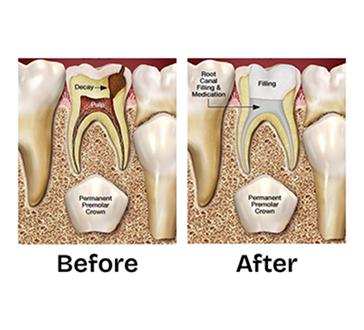
Pulpectomy is indicated when:
While pulpotomy and pulpectomy are similar in that they both treat infections in the dental pulp, they differ in terms of the extent of treatment. The main differences between the two are:
Pulpotomy and pulpectomy are essential procedures in pediatric dentistry that target Children’s teeth pain and aim to save primary teeth from infection and preserve their function until the natural exfoliation process occurs. While pulpotomy is a partial pulp removal procedure, pulpectomy involves the complete removal of infected pulp tissue from the entire tooth. Both treatments offer significant benefits, including pain relief, infection control, and space maintenance for permanent teeth. Early diagnosis and intervention are key to ensuring the success of these procedures, ultimately contributing to the child’s long-term oral health.
A pulpectomy is more involved than a pulpotomy and requires more extensive cleaning and filling of the root canals. The steps involved include:
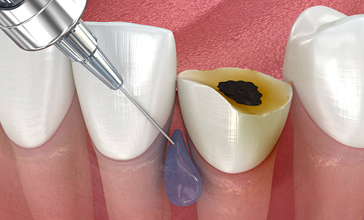
Just like pulpotomy, the procedure begins with the administration of a local anesthetic to numb the tooth and surrounding area.
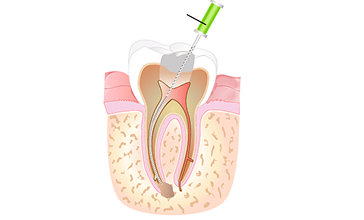
The dentist makes an opening into the tooth to access both the pulp chamber and the root canals.
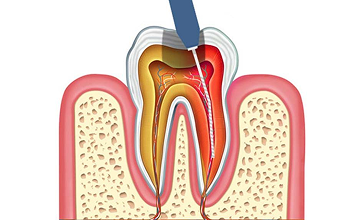
The entire pulp from both the crown and root canals is carefully removed using specialized instruments.
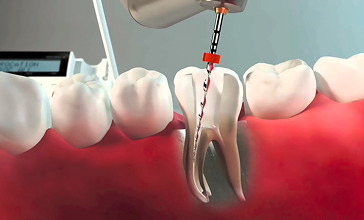
The empty root canals are thoroughly cleaned, shaped, and disinfected to remove any remaining bacteria or infected tissue.
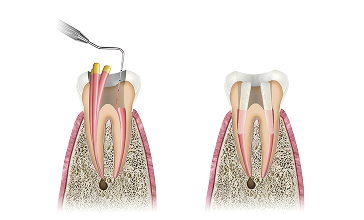
After cleaning, the root canals are filled with a biocompatible material, such as zinc oxide eugenol or resilon, to prevent future infection.
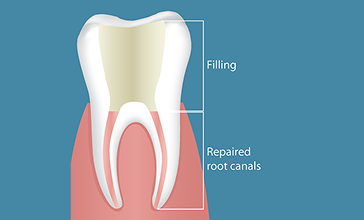
Once the root canals are filled, the tooth is sealed with a crown or permanent filling.
The primary benefit of pulpectomy is the complete elimination of infection from both the pulp and the root canals, which helps to prevent further spread of infection or abscess formation.
Pulpectomy also preserves the primary tooth, which is crucial for maintaining normal oral function, proper chewing, and space for the developing permanent tooth.
Best Results
Painless Treatment
Result in time